
Service
Acupuncture and dry needling in Falkirk
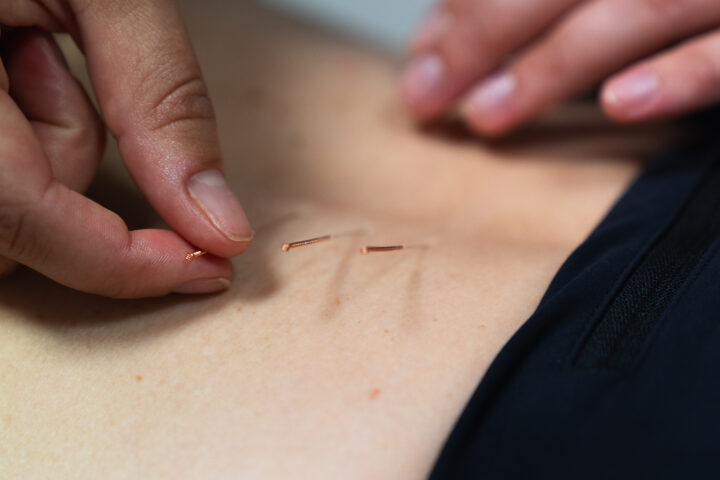
Used by our physiotherapists as part of a broader plan, rather than in isolation. Fine needles target tight muscle and trigger points to help reduce pain and ease tension. We'll always talk you through it first, so you understand what's involved and why we're suggesting it for you.
At a glance
Part of a broader plan
Used alongside your treatment, not in isolation.
Targets trigger points
Fine needles ease tight muscle and pain.
Explained first
We talk you through it before we begin.
Acupuncture and dry needling offer an effective, evidence-based route to pain relief and muscle recovery, used alongside our physiotherapy and manual therapy to target the deeper, often stubborn issues that other treatments alone may not fully resolve.
Both techniques involve the insertion of fine, sterile needles into specific points on the body, either directly into tight, trigger points within the muscle belly (dry needling) or at points known to stimulate the body’s natural pain-relieving response (acupuncture).
This helps release muscle tension, improve blood flow, and encourage the body’s own healing processes, reducing pain and restoring more normal movement.
These treatments are well suited to those managing:
- Acute or chronic muscle and joint pain
- Muscle spasms and stubborn trigger points
- Tendon and overuse injuries
- Headaches and tension-related pain
- Sports injuries and repetitive strain
As with all our treatments, we begin with a careful assessment of your condition before deciding whether acupuncture or dry needling is appropriate, and build this into a wider, customised treatment plan, often combined with manual therapy and exercise rehabilitation for longer-lasting results. Acupuncture and dry needling are included as part of your physiotherapy treatment at no extra cost.
When it may not be suitable
- Needle phobia or inability to tolerate needles
- Pregnancy, certain points are avoided, particularly in early pregnancy (always disclose pregnancy beforehand)
- Bleeding disorders or use of anticoagulant medication (e.g. warfarin)
- Active infection, either locally (at the needling site) or systemically
- Epilepsy (some techniques, such as electro-acupuncture, may need caution)
- Lymphoedema, or treatment near an area with lymph node removal
- Pacemakers or other implanted electrical devices (particularly relevant for electro-acupuncture)
- Metal allergies (rare, but relevant to needle material)
- Children under 12 (generally avoided or requires specific caution)
- Immunocompromised individuals
- Directly over unhealed wounds, active skin conditions, or tumours
This page is general information, not personal medical advice. Read our medical disclaimer.