
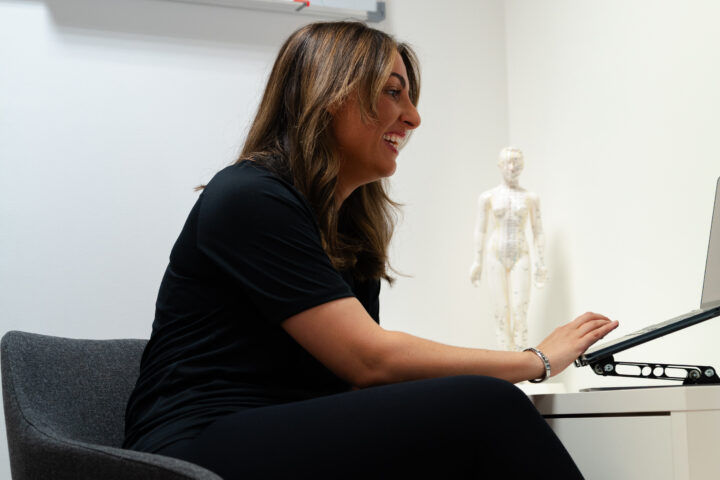
If your back feels stiff or sore after a working day, you are far from alone. Long periods in one position can leave the muscles around your spine feeling tired and sensitive. This is common, and for most people it does not signal any damage to the back.
Why sitting can aggravate your back
The spine is strong and built for movement. It tends to feel its best when it is used regularly through the day. Holding any single position for a long time, whether sitting or standing, can allow tension to build. That discomfort is usually a sign that your body would like a change of position rather than a warning that something is wrong.
Small changes that add up
- Take a short movement break every 30 to 45 minutes, even if only to stand and walk to the kettle.
- Set your screen roughly at eye level and keep your forearms supported when typing.
- Vary how you sit through the day rather than aiming for one fixed posture.
- Keep generally active outside work, as regular walking and exercise support a healthy back.
The best posture is often simply your next posture. Moving regularly tends to help more than holding any single position.
Ryan Wesson, Clinical Director and Lead Physiotherapist
How physiotherapy can help
If your symptoms are persistent, keep returning, or are affecting your work and sleep, a physiotherapy assessment can help. We take time to understand your history, examine how you move, and rule out anything that needs onward referral. From there we build a simple, personalised plan, which often includes hands-on treatment alongside specific exercises and practical advice for your working day.
When to seek urgent medical advice
Most back pain is not serious, but please do not wait for a physiotherapy appointment if you develop any of the following. Contact your GP, call NHS 111, or in an emergency go to A and E.
- Loss of bladder or bowel control, or numbness around the back passage or genitals
- Severe pain that is getting steadily worse, especially at night
- Numbness, pins and needles or weakness in both legs
- Back pain following a significant fall or accident
- Feeling generally unwell with your back pain, for example fever or unexplained weight loss