
Sudden spinning when you turn over in bed, look up to a high shelf, or bend down to tie your laces is unsettling, especially the first time it happens. One of the most common causes we see for this kind of dizziness is BPPV, and the good news is that it’s very treatable from your first session.
What is BPPV?
BPPV stands for Benign Paroxysmal Positional Vertigo. That’s a lot of words for a fairly simple problem: tiny calcium crystals inside your inner ear, which normally help you sense balance and movement, become dislodged and drift into the wrong part of the ear’s balance system. When you move your head into certain positions, these crystals shift and send confusing signals to your brain about where you are in space. Your brain interprets that as spinning, even though you’re standing still.
It’s benign, meaning it isn’t dangerous, and paroxysmal, meaning it comes on suddenly and in short bursts rather than sitting there constantly.
What does it feel like?
- A brief, intense spinning sensation, usually lasting seconds to a minute or two
- Triggered by specific head movements, most often rolling over in bed, looking up, or bending forward
- Possible nausea alongside the dizziness
- Some unsteadiness that can linger after the spinning settles
- Episodes that come and go, sometimes for weeks, sometimes for longer
What causes it?
Often there’s no obvious trigger at all. It becomes more common as we get older, and can follow a knock to the head, a period lying flat for a while, or simply happen out of nowhere. It’s one of the most common causes of vertigo we assess in clinic.
How do we treat it?
The encouraging part is that BPPV usually responds very well to a short course of hands-on treatment.
- We take a full history and carry out a simple positional test to confirm which ear, and which part of the balance system, is involved
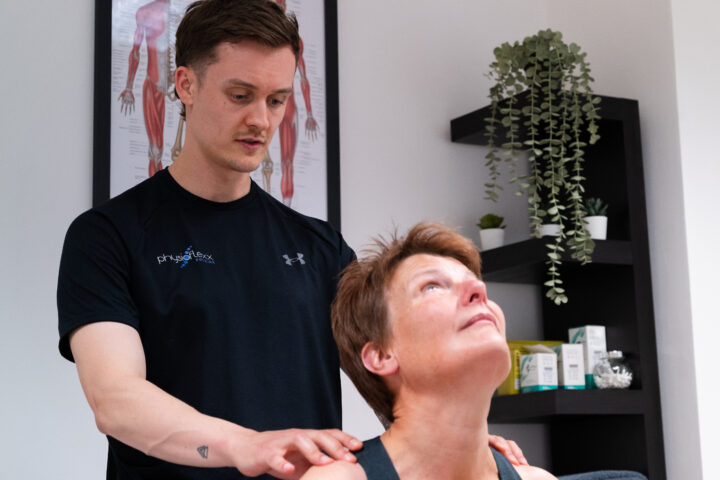
- In many cases, we can begin treatment in that same appointment using a repositioning manoeuvre, most commonly the Epley manoeuvre
- This manoeuvre guides the displaced crystals back to where they belong through a specific sequence of head and body movements
- Many people notice a real improvement after a small number of sessions, though this varies from person to person
- We'll also give you simple exercises and advice to support your recovery in the days that follow